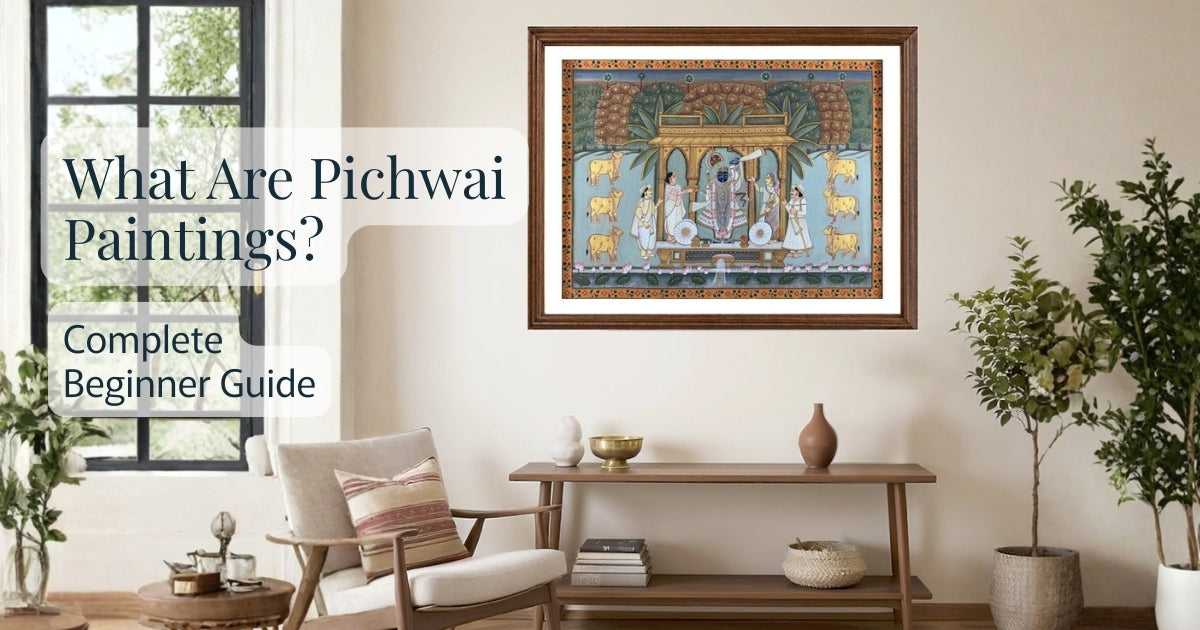
Walk into an art gallery or a thoughtfully designed home, and there's a good chance you'll come across a painting filled with lotus flowers, graceful cows, intricate patterns, and the unmistakable presence of Lord Krishna. It feels timeless. Even if you've never heard the name before, you've probably admired one without realising it.
That's the charm of Pichwai Paintings. They don't shout for attention. Instead, they quietly draw you in with their incredible detail, rich symbolism, and centuries-old craftsmanship. Today, these artworks are appreciated not only for their religious significance but also for the elegance they bring to contemporary interiors. So, what exactly are Pichwai paintings, and why have they remained relevant for generations? Let's start from the beginning.
The Story Behind Pichwai Paintings
The word "Pichwai" comes from two Sanskrit words that roughly translate to "hanging at the back". Traditionally, these paintings were created as large decorative backdrops for the idol of Shrinathji, a form of Lord Krishna, in temples across Rajasthan. Over time, these temple backdrops evolved into highly detailed artworks admired by collectors and art lovers around the world.
Every element within a Pichwai has meaning. Lotus flowers represent purity, cows symbolise devotion, and peacocks often celebrate beauty and prosperity. Rather than simply decorating a space, each painting tells a visual story inspired by Krishna's life and different festive occasions celebrated in temples. That's one reason Pichwai Paintings continue to hold such a special place in Indian art.
A Brief Look At Their History
Understanding the Pichwai art history makes these paintings even more fascinating. The tradition dates back to the 17th century and is closely connected with Nathdwara in Rajasthan. Skilled artisans created elaborate paintings to celebrate important festivals like Janmashtami, Annakut, Holi, and Sharad Purnima.
Instead of displaying the same artwork throughout the year, temples often changed the paintings according to seasons and religious celebrations. This meant artists constantly created new compositions while preserving traditional techniques. Even today, many craftsmen continue following methods that have been passed down through generations, using fine brushes, natural colours, and painstaking hand-painted details.
Why Krishna Appears So Frequently
One of the first things people notice is how often Lord Krishna appears in these artworks. That's completely intentional. A Krishna Pichwai Painting isn't simply a portrait. It represents stories, traditions, devotion, and celebrations connected with Krishna's life.
Some paintings show him playing the flute among cows. Others capture festive scenes filled with flowers, lotuses, or beautifully decorated temples. Every composition reflects a particular mood or religious occasion. Even people who buy these paintings purely for their artistic appeal often appreciate the peaceful atmosphere they create inside a room. The spiritual symbolism and visual elegance work together naturally.
What Makes Pichwai Art Different?
India has countless traditional art forms, each with its own identity. So what makes Pichwai stand apart? The level of detail is one reason. Artists spend hours - sometimes weeks or even months - carefully painting intricate floral borders, textile-inspired patterns, expressive animals, and delicate architectural elements. Every brushstroke contributes to a larger visual narrative.
Unlike many modern decorative artworks, Pichwai paintings aren't designed around minimalism. They celebrate richness, storytelling, and craftsmanship without feeling overwhelming. That's why they're often considered among the finest Traditional Indian Paintings still practised today.
Why They're Popular In Modern Homes
Interestingly, Pichwai paintings aren't limited to temples anymore. Interior designers, collectors, and homeowners increasingly use them to add warmth and character to living spaces. A large Pichwai artwork can become the focal point of a dining room, entrance hallway, or living area without making the space feel outdated. The blend of traditional craftsmanship with timeless aesthetics makes these paintings surprisingly versatile. Whether paired with classic wooden furniture or modern interiors, they create a strong visual statement.
Perhaps that's why younger generations have also started appreciating this centuries-old art form again.
Choosing Your First Pichwai Painting
If you're planning to buy one, don't worry about understanding every religious symbol immediately. Instead, focus on the craftsmanship. Look at the detailing, colour balance, hand-painted elements, and overall composition. Authentic handmade pieces often display incredible precision and depth that machine-made reproductions struggle to match.
More importantly, choose a painting that genuinely speaks to you. Whether it's a floral composition, a festive temple scene, or a Krishna-inspired artwork, the right piece should feel meaningful every time you look at it.
Final Thoughts
The beauty of Pichwai paintings goes far beyond decoration. They carry centuries of history, artistic excellence, and cultural storytelling within every brushstroke. Whether you're discovering Indian art for the first time or looking to build a meaningful collection, Pichwai paintings offer something that feels both timeless and deeply personal.
If you're exploring authentic handcrafted artworks inspired by India's rich artistic traditions, Design Gaatha showcases thoughtfully curated collections that celebrate heritage while complementing contemporary living spaces.
FAQs
1. What are Pichwai Paintings?
Pichwai paintings are traditional artworks that originated in Rajasthan as decorative backdrops for Lord Shrinathji's temple. Known for their intricate detailing, symbolic motifs, and devotional themes, they continue to be admired for their artistic beauty and cultural significance in both religious and contemporary settings.
2. What is the significance of Pichwai Art History?
The Pichwai Art History dates back to the 17th century and reflects the artistic traditions of Nathdwara in Rajasthan. These paintings were created to celebrate different festivals associated with Lord Krishna and continue to preserve centuries-old techniques, cultural values, and exceptional craftsmanship through handmade artistic practices.
3. Why is the Krishna Pichwai painting so popular?
A Krishna Pichwai painting beautifully represents stories, festivals, and devotional moments associated with Lord Krishna. Beyond its religious importance, many people appreciate these artworks for their peaceful imagery, intricate craftsmanship, and ability to create a calming, elegant atmosphere within homes and art collections alike.
4. Can Pichwai paintings suit modern home interiors?
Yes, absolutely. Their timeless designs work beautifully alongside both traditional and contemporary interiors. Whether displayed in a living room, hallway, dining space, or office, these paintings add depth, character, and cultural richness while becoming an elegant focal point within the overall décor.
5. Why are traditional Indian paintings still valued today?
Traditional Indian paintings continue to remain popular because they preserve artistic heritage while offering timeless visual appeal. Handmade artworks reflect remarkable craftsmanship, storytelling, and cultural significance that modern mass-produced décor often cannot replicate, making them treasured additions for collectors and homeowners alike.