Every morning, millions of people walk out of grocery stores, markets, and shops carrying single-use plastic or paper bags — each one used for a few minutes, then discarded. Most of those bags will outlast the person who used them by several centuries. It's one of those quiet environmental realities that rarely gets the attention it deserves, which is exactly why the choice to carry a reusable tote bag — simple as it sounds — is one of the most meaningful small shifts you can make toward more sustainable living.
But sustainability doesn't have to mean compromise. And it certainly doesn't have to mean carrying a limp, logo-printed bag that you're slightly embarrassed to be seen with. At Design Gaatha, our handcrafted canvas tote bag collection was built on a different premise entirely — that a reusable bag can be beautiful, artisan-made, deeply personal, and still completely practical for everyday life. This blog explores why reusable tote bags matter more than most people realise, and how making the switch can be both a values-led and aesthetically satisfying choice.
The Problem with Single-Use Plastic Bags — Why It's Bigger Than You Think
Before we talk about the solution, it's worth understanding the scale of the problem that reusable tote bags are quietly addressing.
Single-use plastic bags are one of the most pervasive forms of plastic pollution in the world. They're lightweight, which means wind carries them easily into water bodies, forests, and streets. They're thin, which means most recycling facilities cannot process them. And they're produced in staggering quantities — estimates suggest hundreds of billions are used globally every year.
The environmental cost is significant across several dimensions:
-
Plastic bags take 10–1,000 years to decompose, breaking down into microplastics that enter soil, water systems, and eventually the food chain rather than disappearing.
-
They harm wildlife extensively — marine animals, birds, and land animals regularly ingest or become entangled in discarded plastic bags.
-
They're made from fossil fuels — the production of plastic bags consumes petroleum and natural gas, contributing to carbon emissions even before the bag reaches a consumer's hands.
-
They are rarely recycled — despite the theoretical possibility, most plastic bags end up in landfills or as litter because they require specialised recycling infrastructure that isn't widely accessible.
Against this backdrop, the reusable tote bag isn't just a lifestyle accessory. It's a practical, scalable response to one of the most avoidable forms of everyday plastic waste.
Why Reusable Tote Bags Are One of the Most Impactful Everyday Switches
The beauty of the reusable tote bag as a sustainability choice is its simplicity. It doesn't require a significant lifestyle overhaul, a large financial investment, or any particular expertise. It just requires carrying the bag consistently — which becomes effortless once it's part of your routine.
Here's what that consistency adds up to:
Significant plastic reduction over time. A single reusable bag used regularly can replace hundreds, potentially thousands, of plastic bags over its lifetime. A well-made canvas tote can last years of daily use — meaning the environmental payoff scales dramatically the longer you use it.
Lower carbon footprint per use. The production of a canvas tote bag does require more resources upfront than a single plastic bag. But this initial cost is offset quickly — most studies suggest a reusable bag becomes net beneficial for the environment after just a few dozen uses. After that, every use is environmental savings.
Reduced contribution to landfill and litter. By choosing not to take a plastic bag at checkout, you're directly reducing the volume of single-use plastic entering the waste stream. Multiply this across daily shopping trips, markets, and errands over a year, and the cumulative impact is genuinely meaningful.
Supporting mindful, intentional consumption. There's a psychological dimension to carrying a reusable bag that goes beyond the environmental maths. It's a daily reminder that the things you carry into your home — and what they're carried in — are choices. That mindfulness, once cultivated, tends to extend to other consumption decisions as well.
Why the Bag You Choose Matters — Quality, Craft, and Longevity
Not all reusable bags are created equal, and this distinction matters both environmentally and practically.
A thin, non-woven polypropylene "reusable" bag — the kind often sold at supermarket checkouts for a few rupees — is technically reusable but rarely lasts more than a few months before tearing or wearing out. Its lifespan is short, its material is still synthetic, and it doesn't biodegrade meaningfully.
A well-made canvas tote in natural cotton, by contrast, is durable, washable, and genuinely long-lasting. Canvas bags are highly durable, lightweight, and environmentally friendly, making them ideal for everyday activities — they can carry heavier items without tearing and are easy to maintain, while offering a natural aesthetic that pairs well with both casual and professional outfits.
This is why investing in a quality handcrafted tote bag is both an environmental and a practical decision. A bag that lasts five or ten years — used daily, washed regularly, and still looking beautiful — replaces far more single-use plastic than one that wears out in a season.
Design Gaatha's Tote Bag Collection — Where Sustainability Meets Artisan Craft
Design Gaatha's approach to the reusable tote bag is rooted in the same philosophy that runs through the entire brand: that everyday objects should be made with care, carry a story, and be beautiful enough that you genuinely want to use them.
The collection spans several distinct styles, each reflecting a different craft tradition while maintaining the practical demands of a bag that works for real life.
Hand Block Printed Canvas Tote Bags — Everyday Artistry
Canvas is the gold standard material for a reusable tote — sturdy, natural, washable, and tactile in a way synthetic alternatives are not. Design Gaatha's handcrafted canvas totes blend traditional Indian block printing with contemporary design, creating bags that are visually distinctive without being loud or trend-dependent.
A hand block printed canvas tote carries the visual signature of the artisan who made it — slight variations in ink depth and print alignment that make each bag subtly unique. These are bags that invite a second look and, more importantly, bags you'll actually reach for rather than leaving at home.
Hand Embroidered Tote Bags — Elevated Daily Carry
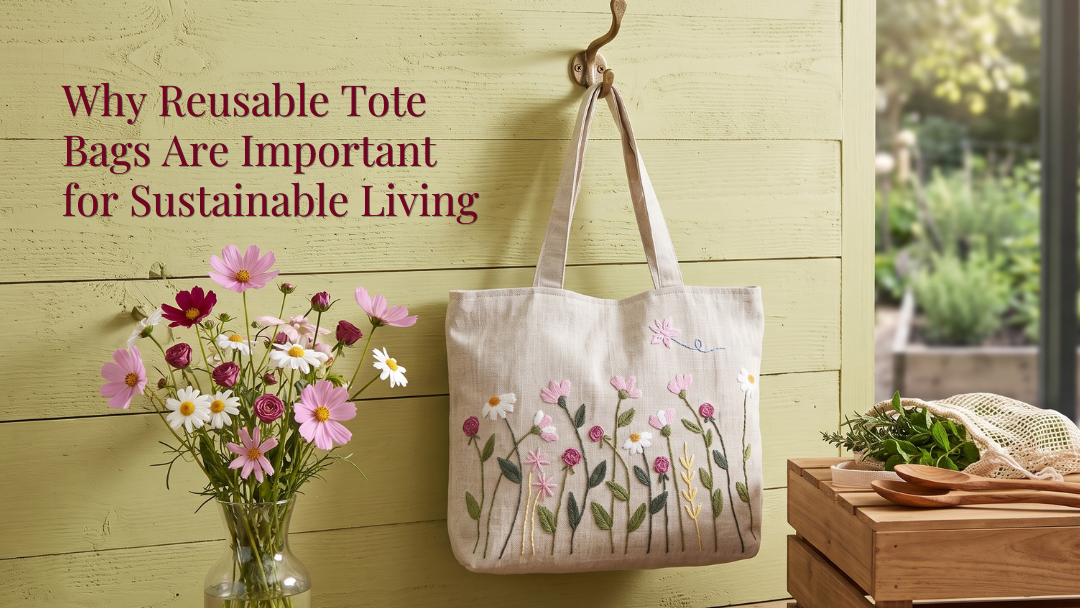
For those who want their reusable bag to feel like a considered accessory rather than a functional afterthought, Design Gaatha's hand embroidered tote bags are an exceptional choice. Carrying one of these to a market, a café, or a work meeting is a statement — not of anything loud or promotional, but of quiet, considered taste.
Simple Canvas Totes — The Daily Essential
Sometimes the most sustainable choice is also the simplest. Design Gaatha's more minimal canvas tote options offer the same artisan ethos and durable material construction in a straightforward, no-fuss format — ideal for grocery runs, market visits, and anyone building their first sustainable bag habit who wants to start without overthinking it.
How to Use Your Reusable Tote Bag Every Day — Practical Tips
The single biggest barrier to actually using a reusable tote bag consistently is forgetting to bring it. Here's how to make it second nature:
Keep one in every bag you regularly use. The folded canvas tote that lives permanently in your work bag, handbag, or backpack is the one that actually gets used. Don't rely on remembering to bring it separately.
Store one near your front door. A hook, a shelf, or even a chair near your exit point — wherever you see it on your way out — acts as a natural reminder before every trip.
Keep a dedicated grocery tote in the car. For those who drive to shop, a canvas tote kept permanently in the car eliminates the most common excuse: "I forgot to bring it."
Wash it regularly. A canvas tote, especially one used for groceries, benefits from regular washing to stay fresh and hygienic. Most cotton canvas bags handle machine washing well on a gentle cycle — another advantage over synthetic alternatives.
Treat it like an accessory, not an obligation. When your reusable bag is something you actually like — a hand embroidered piece, a beautiful block print, a bag that feels like an intentional choice — you're far more likely to carry it consistently.
Styling Your Reusable Tote Bag — It's an Accessory, Not Just a Bag
One of the genuine pleasures of a well-designed reusable tote is that it functions as a style accessory. Here's how to integrate yours into your daily look thoughtfully:
Pair canvas tote bags with casual or workwear for a relaxed yet polished look. A hand block printed canvas tote with a linen kurta or a simple white shirt and trousers feels effortlessly put together without looking like you're trying too hard.
Choose patterned totes as statement accessories for minimal outfits. A hand embroidered bag against a solid-colour outfit lets the craftwork become the focal point — exactly as it should.
Coordinate with your other artisan accessories. A Design Gaatha canvas tote pairs naturally with a handcrafted linen pouch or a hand embroidered diary — creating a cohesive aesthetic of artisan craft across your daily carry, without effort or coordination overhead.
Use multiple totes for different purposes. A simple canvas tote for groceries, a more considered embroidered piece for work or social outings — building a small rotation of reusable bags for different contexts is both practical and satisfying.
Reusable Tote Bags as Thoughtful Gifts
A handcrafted tote bag is also one of the most universally appropriate and genuinely useful gifts you can give — particularly for anyone making conscious efforts toward more sustainable living.
Unlike many gifts that are used once or stored away, a beautiful reusable bag becomes part of someone's daily life. It's practical, personal, and carries a story. Pairing a Design Gaatha tote with a hand embroidered diary or a set of artisan candles creates a complete sustainable living gift bundle that feels genuinely considered — ideal for housewarmings, birthdays, Diwali gifting, or any occasion where you want the gift to reflect real thought.
Frequently Asked Questions (FAQs)
Q: How many times do I need to use a reusable tote bag to offset its environmental impact?
Research suggests that a cotton canvas tote bag needs to be used roughly 50–130 times to offset the environmental cost of its production compared to a single-use plastic bag. Given that a well-made canvas tote lasts for years of daily use, this threshold is easily reached within a few months — after which every use is a net environmental benefit.
Q: Are canvas tote bags actually better for the environment than plastic bags?
Yes, over their lifetime. Canvas bags require more resources to produce than a single plastic bag, but their durability means they replace hundreds or thousands of single-use bags over their lifespan. The key is using them consistently and for as long as possible — which is why investing in a quality, well-made bag makes environmental sense.
Q: How do I wash and care for a canvas tote bag?
Most cotton canvas tote bags can be machine washed on a gentle cycle with mild detergent in cold water. For embroidered bags, hand washing is preferable to protect the stitching. Air dry flat or on a line — avoid tumble drying, which can shrink cotton and stress embroidered details over time.
Q: Can a tote bag be used for grocery shopping and also for work or outings?
Absolutely. This versatility is one of the tote bag's greatest strengths. A well-designed handcrafted tote transitions naturally between grocery runs, market visits, office days, and social outings — especially when the design is considered and the quality is high enough to work in multiple contexts.
Q: What makes Design Gaatha's tote bags different from regular reusable bags sold in stores?
Design Gaatha's tote bags are handcrafted using traditional Indian craft techniques — hand block printing, hand embroidery, and handloom weaving — by skilled artisans. Unlike mass-produced reusable bags, each piece carries genuine artisan character, reflects sustainable material choices, and is built for long-term use rather than seasonal replacement. They're bags you choose because you love them, not because they were handed to you at a checkout counter.
Q: Are handcrafted tote bags suitable for heavy grocery loads?
Yes — canvas is a naturally robust material designed to carry weight without tearing. Design Gaatha's canvas totes feature reinforced handles and quality construction suited for regular grocery and market use. Ikat handloom bags with leather handles offer additional strength through the premium handle construction.