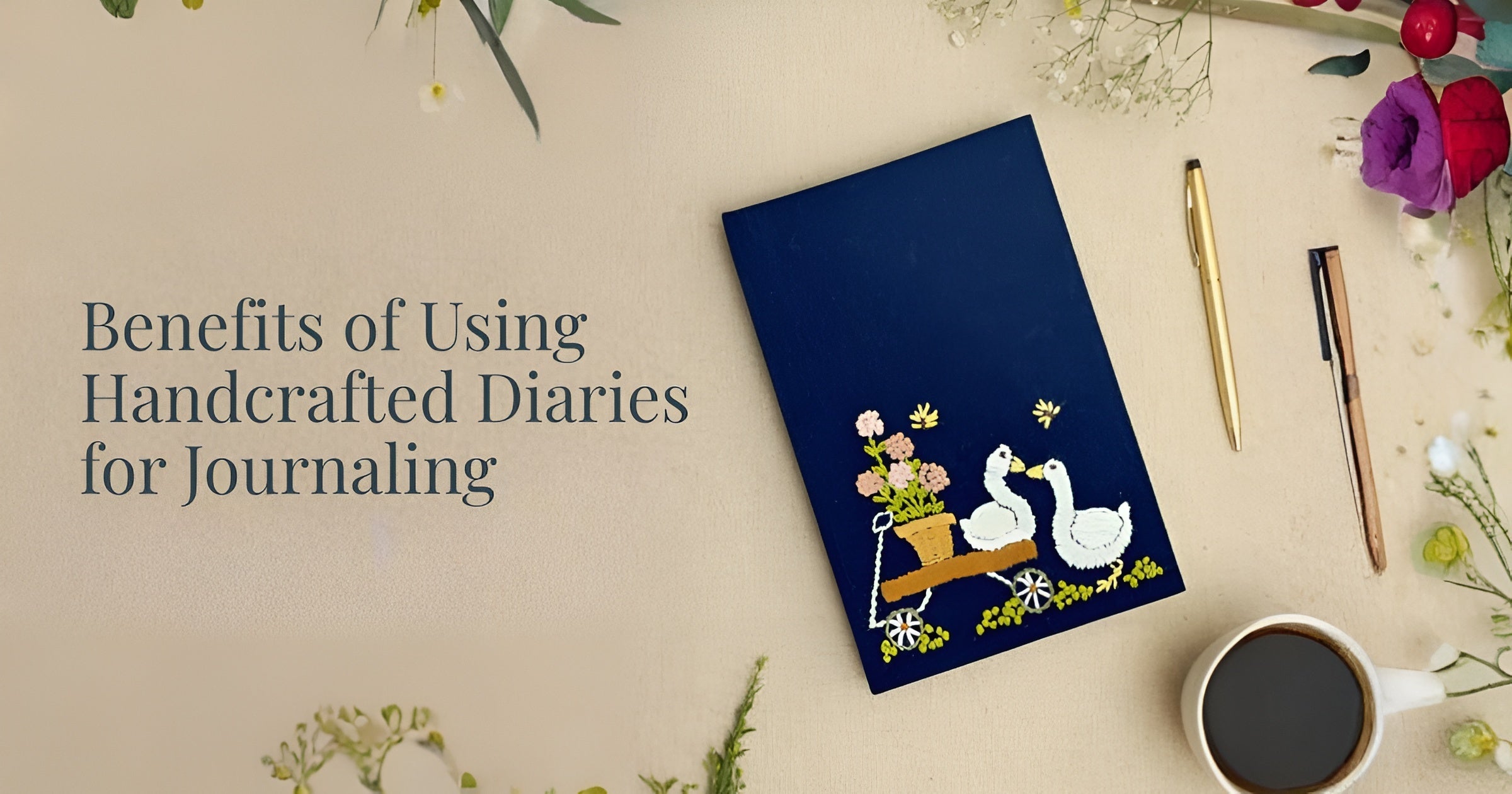
A diary is never really just a place to jot down appointments or scattered thoughts. It holds ideas, memories, sketches, plans — the stuff that actually matters. Digital note-taking has its place, sure, but there's still something to putting pen on paper, especially when the diary itself was made by hand.
Every handmade diary has a story behind it long before you write a single word. From the materials chosen at the start to the finishing touches at the end, each stage reflects the patience and skill of the artisan who made it. Once you understand how these diaries actually come together, it's hard not to appreciate them a little more.
Handmade Diaries: A Blend of Craftsmanship and Creativity
Handmade diaries don't happen quickly, and they certainly don't happen on a machine. Every stage — preparing the cover, binding the pages — demands real attention.
Design Gaatha works alongside skilled artisans across India to create handcrafted lifestyle products rooted in traditional Indian craftsmanship. Each diary carries techniques passed down through generations, blending practical use with genuine artistic design. Rather than churning out thousands of identical notebooks, these artisans focus on pieces that feel unique, durable, and meaningful — the kind you actually want to keep.
It All Starts with Thoughtfully Chosen Materials
A diary's quality comes down to the materials, right from the very first step. Artisans hand-pick fabrics, leather, handmade paper, wooden elements, or traditional textiles depending on what the design calls for. Every material gets chosen not just for looks, but for how it feels and how long it lasts.
Plenty of handcrafted diaries feature traditional Indian textiles, hand block prints, embroidered fabric, or naturally inspired finishes — details that make each piece visually distinct from the next. What you end up with is a diary that feels just as special outside as it does once you open it.
Artisan Notebooks Reflect Individual Skill
Artisan notebooks were never meant to look perfectly identical, unlike anything coming off a factory line. Small variations — in stitching, fabric placement, colour, texture — are simply part of the handcrafted process. These aren't flaws. They're proof that real hands were involved in making each one.
That individuality is exactly what makes handmade products feel more personal than anything mass-produced.
Binding Is One of the Most Important Steps
Looking good isn't enough for a diary. It needs to hold up too. Binding takes precision, because the pages have to stay secure through regular, everyday use. Skilled artisans stitch or bind each page carefully before the finished cover goes on, making sure the diary opens smoothly while staying strong enough for daily writing.
Good craftsmanship is the difference between a diary you use for years and one you just admire once and shelve.
Why Handcrafted Journals Feel Different
There's something genuinely satisfying about writing in handcrafted journals. Maybe it's the textured cover. Maybe it's the carefully finished edges. Or maybe it's just knowing someone put real time and skill into making it. Whatever the reason, handcrafted journals tend to slow you down and make writing feel more deliberate.
They work just as well for journalling, sketching, planning, or note-taking as they do as a gift for someone who genuinely appreciates handmade things.
The Beauty of a Handmade Paper Diary
Writing in a handmade paper diary offers something ordinary stationery simply can't match. Handmade paper carries its own texture, its own character, page after page. A lot of people love the way ink settles into it naturally — it makes even routine writing feel a bit more enjoyable.
Paired with handcrafted covers and traditional binding, handmade paper turns an ordinary diary into something that genuinely feels special.
Conclusion
A handmade diary is never just paper and thread. It carries traditional skill, careful craftsmanship, and the dedication of Indian artisans working to keep these techniques alive. Whether you're drawn to elegant artisan notebooks, beautifully designed handcrafted journals, or a timeless handmade paper diary, you're investing in something made with real patience and purpose. Through its carefully curated handcrafted collections, Design Gaatha celebrates India's artistic heritage while bringing thoughtful, beautifully made products into everyday life.
FAQs
1. What makes handmade diaries different from machine-made diaries?
Handmade diaries are crafted individually by skilled artisans rather than mass-produced by machines. Every stage — choosing materials, binding the pages — involves real craftsmanship. Small variations in design and finish give each diary its own character, making it far more personal than anything off a factory line.
2. Why are artisan notebooks becoming more popular?
People are drawn to artisan notebooks because they value originality and genuine craftsmanship. Handmade notebooks often carry traditional textiles, carefully chosen materials, and finishes you simply won't find on factory-made products. They also make for thoughtful gifts for anyone who writes, sketches, or keeps a journal.
3. Are handcrafted journals suitable for everyday use?
They are, yes. Handcrafted journals are built to be both beautiful and genuinely usable. Sturdy binding and carefully chosen materials make them well suited to daily writing, planning, journalling, or creative work. Look after them properly, and they'll hold up for years while becoming a meaningful record of your own thoughts.
4. What are the advantages of a handmade paper diary?
A handmade paper diary gives you a genuinely different writing experience — the paper's natural texture and distinctive look set it apart. Many people find writing on handmade paper more tactile, more artistic, making even simple note-taking feel a bit more memorable.
5. Why should I choose handcrafted products over mass-produced stationery?
Choosing handcrafted products means supporting skilled artisans keeping traditional techniques alive across generations. You also get originality, thoughtful design, and attention to detail that large-scale manufacturing just can't replicate. Handmade products carry genuine character — and buying them helps sustain the craftsmanship behind them.