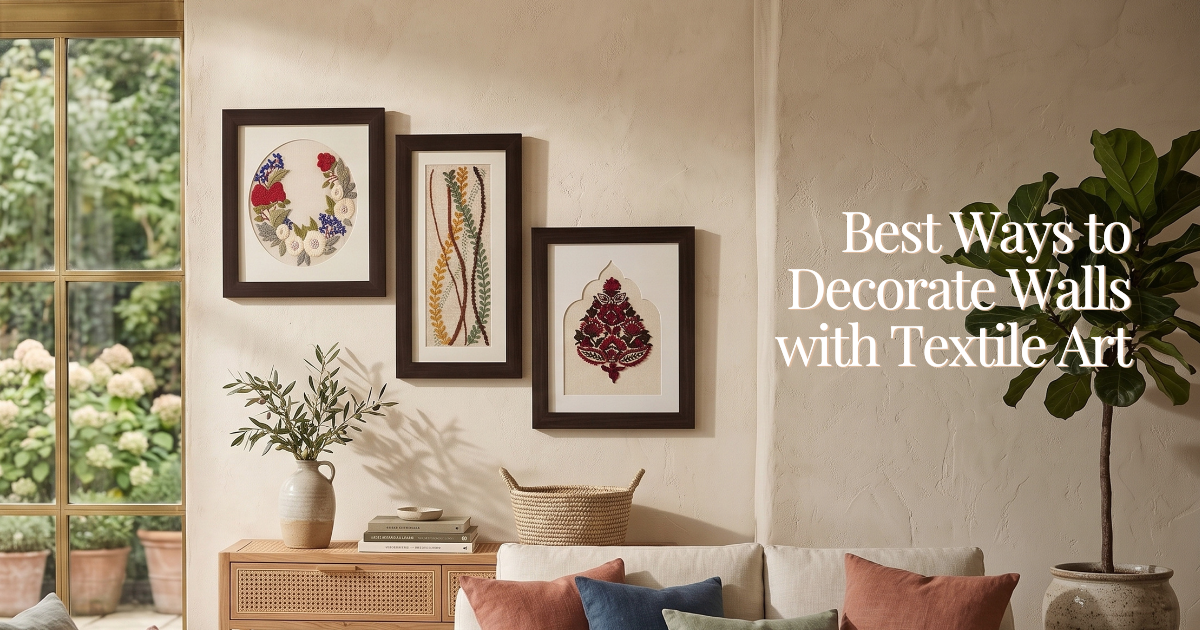
Blank walls have a way of making even a beautifully furnished room feel unfinished. We obsess over sofas, rugs, and lighting, but the walls — the largest visual surface in any room — often get left with a single framed print or, worse, nothing at all. Textile art is quietly changing that. Instead of glass-framed prints or mass-produced canvas art, more homes are turning to fabric, embroidery, and hand-worked textures to bring warmth, story, and depth to their walls.
There's a reason textile art feels different from conventional wall decor. Fabric catches light differently than print or paint. It gives texture, a sense of touch even from across the room. And when it's handcrafted — hand block printed, hand embroidered, or hand-painted — it carries a story that a factory-made print simply cannot replicate. At Design Gaatha, this philosophy shows up clearly in pieces like our hand embroidered framed wall art, where traditional embroidery techniques meets modern aesthetics to create something that feels like art rather than decoration& applies to all interiors.
If you're considering bringing textile art into your home, here's a complete guide to doing it well.
Why Textile Art Deserves a Place on Your Walls
Textile art isn't a passing décor trend — it's one of the oldest forms of wall decoration in the world, and it's having a well-earned revival in modern Indian homes. Here's why it works so beautifully:
-
It adds texture in a way flat art cannot. A framed embroidered piece or a hand block printed panel has dimension — light falls differently across stitched thread or raised fabric than it does on a flat printed surface.
-
It softens a room acoustically and visually. Fabric-based wall pieces absorb sound subtly and reduce the visual harshness that can come from too many hard surfaces — glass, metal, polished wood.
-
It tells a story. Hand block printing, embroidery, and traditional motifs carry centuries of craft history. A textile wall piece isn't just decoration; it's a small cultural artefact for your home.
-
It works across design styles. Whether your home leans minimalist, maximalist, traditional, or eclectic, there's a textile art style — from a single muted embroidered panel to a vibrant gallery wall of fabric pieces — that fits.
-
It's a sustainable, slower form of decor. Choosing artisan-made textile pieces over mass-produced prints supports traditional craft communities and brings a more conscious sensibility to how you decorate.
Ways to Decorate Walls with Textile Art
1. Frame It Like Fine Art
The simplest, most elevated way to bring textile art into a room is to frame it exactly as you would a painting. A framed piece of hand embroidered or block printed fabric instantly reads as intentional, gallery-worthy decor rather than a casual textile accent.
Framing protects the fabric from dust and handling while giving it the visual weight of fine art. This approach works particularly well in formal living rooms, entryways, or as a focal piece above a console table or sideboard.
Styling Tip: A simple wood or matte black frame lets the embroidery and print detail remain the star, without competing visually with the artwork itself.
2. Create a Layered Textile Gallery Wall
Instead of a single statement piece, consider grouping two or three smaller textile pieces together — a framed embroidered panel, a small block print, perhaps a textured fabric swatch in a complementary tone. This layered approach creates visual interest without requiring one oversized, expensive piece.
The key to making this work is restraint in colour palette. Choose pieces that share a common colour family or craft tradition, even if the patterns differ. This keeps the gallery wall feeling curated rather than cluttered.
Styling Tip: Stick to odd numbers (three or five pieces) and vary the sizes slightly — this creates a more natural, less rigid visual rhythm than a perfectly symmetrical grid.
3. Use an Unframed Hanging Piece for a Softer, Bohemian Look
Not every textile wall piece needs glass and a frame. For a more relaxed, organic feel, an unframed fabric panel — hung from a simple wooden dowel or rod — brings movement and softness to a wall in a way a framed piece cannot.
This approach suits bedrooms, reading nooks, or more casually styled living spaces particularly well. The fabric's natural drape and slight movement (especially near a window or fan) gives the wall a living, breathing quality.
Styling Tip: Hang an unframed textile piece slightly above eye level, as you would a piece of art, and let a few inches of fabric extend below the dowel for a relaxed, intentional finish.
4. Coordinate Textile Wall Art With Your Cushions and Linens
One of the most effective ways to make textile wall art feel like part of a considered design scheme — rather than a standalone object — is to echo its colours or motifs elsewhere in the room. A hand embroidered wall piece in soft pink and green, for instance, pairs beautifully with embroidered cushion covers in a complementary tone, or even a coordinating table runner if your living and dining spaces are visually connected.
This doesn't mean everything needs to match exactly — in fact, slight variation in pattern while maintaining a shared colour story tends to look more sophisticated than an overly matched room.
Styling Tip: Pick one dominant colour from your textile wall art and repeat it in at least one other soft furnishing in the room — a cushion, a throw, or curtain fabric — to tie the space together.
5. Use Textile Art to Anchor a Specific Zone
In open-plan homes, textile wall art can do more than decorate — it can define. A striking embroidered or block printed piece hung behind a reading chair, above a console table, or behind a headboard creates a visual anchor that signals "this is a distinct zone" without needing a physical partition.
This is particularly useful in studio apartments or open-concept living-dining spaces, where textile art can subtly delineate different functional areas through colour and visual weight rather than furniture alone.
Styling Tip: Choose a piece sized to roughly two-thirds the width of the furniture below it (a console, a headboard, a sofa) for the most balanced visual proportion.
6. Mix Textile Art With Other Wall Decor Mediums
Textile art doesn't have to dominate a wall entirely. It works particularly well when mixed with other materials — a textile piece alongside a small mirror, a wooden shelf, or a ceramic wall plate creates a layered, collected look that feels personal rather than showroom-styled.
Styling Tip: Vary the materials but anchor the grouping with a single colour thread running through each piece — this prevents the mix from feeling disjointed.
A Quick Buying Guide — Choosing the Right Textile Wall Art for Your Space
With so many options — block print, embroidery, hand-painted fabric, woven panels — here's how to narrow down what's right for your home:
Consider your room's existing palette. A neutral room can take a more vibrant, colourful textile piece as a statement. A room that's already colourful benefits from a more muted, textural textile piece that adds depth without competing for attention.
Think about scale before pattern. Before falling for a specific motif or colourway, measure your wall space. A piece that's too small will look lost; one that's too large can overwhelm a smaller room. As a general guide, wall art should occupy roughly 60–75% of the available wall space above furniture.
Choose craft techniques that suit your aesthetic. Hand block printing tends to feel more graphic and bold; hand embroidery feels more delicate and textural; hand-painted textile pieces (like traditional Pichwai work) bring a more artistic, narrative quality. Each technique creates a distinctly different mood.
Don't ignore framing and finishing. Whether you choose a framed piece or an unframed hanging textile, the finishing — the frame material, the hanging mechanism, the edge treatment — affects how "finished" the final look feels. A well-framed piece elevates even a simple design.
Caring for Textile Wall Art
Textile wall pieces require a slightly different care approach than framed prints or paintings:
-
Dust regularly with a soft brush or lint roller rather than a wet cloth, especially for unframed or embroidered pieces.
-
Keep away from direct, prolonged sunlight, which can fade both dyes and embroidery thread over time.
-
Avoid hanging near high-moisture areas like bathrooms or kitchens, where humidity can affect fabric and stitching.
-
For framed pieces, dust the glass gently and avoid harsh cleaning chemicals near the frame's edges, which can seep into the fabric.
-
Rotate pieces seasonally if possible — this not only refreshes your space but also reduces prolonged light exposure to any single piece.
Frequently Asked Questions (FAQs)
Q: Is textile art suitable for small rooms?
Yes — in fact, textile art works particularly well in smaller rooms because it adds texture and visual interest without requiring large furniture or structural changes. A single well-chosen piece can make a small room feel intentional rather than empty.
Q: Should textile wall art be framed or left unframed?
Both approaches work, depending on the look you want. Framed pieces feel more formal, gallery-like, and protected from dust and handling. Unframed, hanging textile pieces feel more relaxed, bohemian, and tactile. The right choice depends on your room's overall design language.
Q: How do I know what size textile art to choose for my wall?
A simple rule of thumb: wall art should occupy roughly 60–75% of the visible wall space above the furniture it's paired with. Measuring your wall and furniture width before purchasing helps avoid pieces that feel too small or overwhelming.
Q: Can textile art be combined with other types of wall decor?
Absolutely. Textile pieces pair beautifully with mirrors, shelves, and ceramic or wooden decor objects, creating a layered, collected wall display rather than a single isolated piece.
Q: What makes hand block printed or embroidered textile art different from regular wall art?
Hand embroidered pieces highlight intricate needlework, traditional patterns, and the expert artistry of India's most skilled embroiderers — meaning each piece carries genuine craftsmanship and slight natural variation, unlike machine-printed wall art, which is identical across every unit produced. DesignGaatha
Q: How do I keep handcrafted textile wall art looking good over time?
Regular gentle dusting, avoiding direct sunlight, and keeping pieces away from high-moisture areas will preserve both the fabric and any embroidery or print detail for years.
Final Thoughts — Let Your Walls Tell a Story
The best wall decor doesn't just fill empty space — it adds character, warmth, and a sense of intention to a room. Textile art does this in a way few other decor mediums can, bringing texture, craft, and story together on a surface that's too often left as an afterthought.
Whether you choose a single framed embroidered piece as a quiet focal point or build a layered gallery wall of fabric textures and prints, the goal remains the same: walls that feel as considered and personal as the rest of your home.
Explore Design Gaatha's hand embroidered wall art and textile decor collection and find a piece that brings genuine craft and character to your walls.